


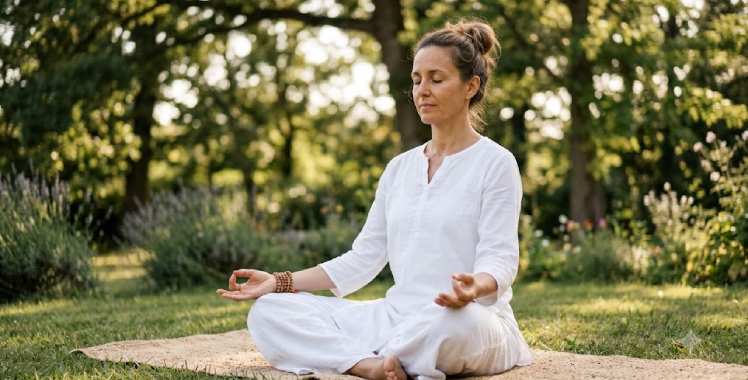
Chakra Meditation: A Practice for Inner Balance
What Chakra Meditation Is
Chakra meditation is a contemplative practice that uses focused attention, breath, visualization, and often sound to engage with the body's seven primary energy centers — from the base of the spine to the crown of the head. Unlike meditation styles that simply aim for general stillness or open awareness, chakra meditation is deliberately structured: attention is guided to a specific location in the body, paired with qualities, colors, and sometimes sounds traditionally associated with that center, with the goal of recognizing and releasing whatever blockage or imbalance exists there.
The underlying premise, drawn from tantric and yogic traditions, is that each chakra governs a distinct dimension of experience — physical, emotional, mental, and spiritual — and that imbalance in any one center tends to express itself as a recognizable pattern: chronic anxiety, creative stagnation, low self-worth, emotional withdrawal, difficulty speaking up, mental fog, or a sense of disconnection from anything larger than oneself. Chakra meditation offers a way to work with these patterns directly, rather than only at the level of thought or behavior.
The Seven Centers at a Glance
|
Chakra |
Location |
Core Theme |
Associated Color |
|---|---|---|---|
|
Mūlādhāra (Root) |
Base of spine |
Security, survival, grounding |
Red |
|
Svādhiṣṭhāna (Sacral) |
Lower abdomen |
Creativity, pleasure, emotion |
Orange |
|
Maṇipūra (Solar Plexus) |
Upper abdomen |
Willpower, confidence, identity |
Yellow |
|
Anāhata (Heart) |
Center of chest |
Love, compassion, connection |
Green |
|
Viśuddha (Throat) |
Throat |
Communication, truth, expression |
Blue |
|
Ājñā (Third Eye) |
Between the eyebrows |
Intuition, insight, clarity |
Indigo |
|
Sahasrāra (Crown) |
Top of head |
Transcendence, unity, pure awareness |
Violet / White |
These correspondences aren't arbitrary — they form a kind of symbolic language that practitioners use consistently, which makes visualization and focus easier to sustain over repeated sessions.
How a Chakra Meditation Actually Works
Most chakra meditation practices share a similar underlying structure, even when the specific techniques vary between traditions or teachers:
1. Settling the body and breath
Practice typically begins seated, spine naturally upright, with a few minutes of slow, even breathing to shift out of a scattered or reactive state before any focused work begins.
2. Directing attention to a specific center
Rather than observing the mind broadly, attention is narrowed to one chakra's physical location — the base of the spine, the lower belly, the chest, and so on — often with a light visualization of its associated color glowing or spinning there.
3. Observing without forcing
A key instruction across most traditions: notice whatever is present at that center — tension, numbness, emotion, resistance — without immediately trying to change it. The looking itself is considered part of the work; forcing a "fix" tends to bypass rather than resolve what's actually there.
4. Supporting the focus with sound or breath
Many practices pair each chakra with a seed sound (bīja mantra) — traditionally LAM, VAM, RAM, YAM, HAM, OM, and silence for the crown — chanted or hummed softly to create a felt vibration at that location. Breath is sometimes also directed there, imagined as flowing into and softening the area.
5. Moving through the centers in sequence
A full practice often travels from root to crown, spending a few minutes at each chakra, building a sense of continuity and connection through the whole system rather than isolating one area.
6. Closing in stillness
Sessions typically end with a period of simple, unstructured sitting — allowing whatever shifted during the practice to settle, rather than rushing straight back into activity.
A Simple Root-to-Crown Practice
For anyone wanting to try this directly, here's a straightforward version:
- Sit comfortably, spine tall, eyes closed. Take five slow breaths to arrive.
- Root — Bring attention to the base of the spine. Visualize a steady red glow. Silently repeat: I am safe, I am grounded. Stay for one to two minutes.
- Sacral — Shift attention to the lower belly. Visualize warm orange light. Silently repeat: I allow myself to feel and create.
- Solar Plexus — Move to the area just above the navel. Visualize a bright yellow light. Silently repeat: I trust my own strength.
- Heart — Rest attention at the center of the chest. Visualize soft green light expanding outward. Silently repeat: I give and receive love freely.
- Throat — Bring attention to the throat. Visualize clear blue light. Silently repeat: I speak my truth with ease.
- Third Eye — Focus gently between the eyebrows. Visualize deep indigo light. Silently repeat: I trust my inner knowing.
- Crown — Bring attention to the top of the head. Visualize violet or white light opening upward. Silently repeat: I am connected to something greater than myself.
- Sit in stillness for a final minute or two before slowly opening your eyes.
The entire sequence can take anywhere from 10 to 30 minutes depending on how long you linger at each center.
Why This Kind of Practice Appeals to People
A few reasons chakra meditation has remained popular well beyond its traditional roots:
- It gives diffuse feelings a location. Rather than vaguely "feeling off," a practitioner can ask, more specifically, where in this system the imbalance seems to sit — which often makes it easier to work with.
- It combines structure with introspection. The chakra framework provides enough scaffolding to guide the session, while still leaving room for genuinely personal, observational insight.
- It bridges body and mind. By anchoring attention to physical locations, it tends to feel more grounded and embodied than purely abstract mindfulness practice.
Important Notes
- The chakra system is a traditional, symbolic model — not an anatomical one. There's no physical structure in the body that corresponds literally to a "spinning wheel of energy." Approaching the practice as a framework for working with attention and the body tends to be both more accurate and more useful than taking it as literal physiology.
- Strong emotional responses can surface. Because this practice invites close attention to the body, it sometimes brings up stored tension or feeling more directly than open-awareness meditation. This is generally a normal part of the process, but it's worth knowing in advance.
- This is not a substitute for medical or mental health care. For persistent anxiety, depression, trauma, or physical symptoms, professional support remains essential — chakra meditation can be a complementary practice, not a replacement.
Consistency matters more than intensity. A short, regular practice tends to build familiarity with each center far more effectively than occasional long sessions.