


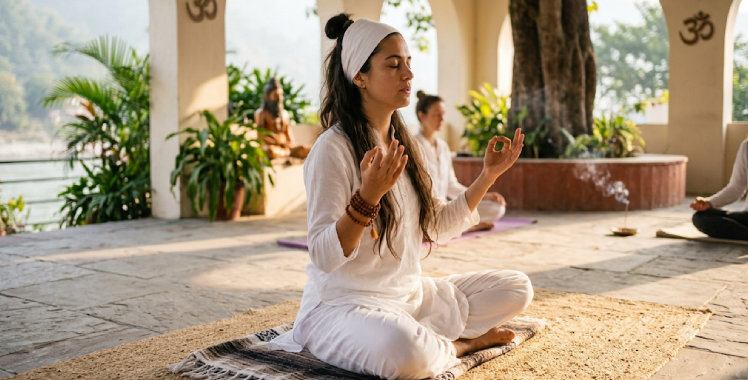
Kundalini Yoga for Chakra Alignment: Awakening the Energy Within
What Kundalini Actually Means
In the yogic tradition, kundalini (कुण्डलिनी) refers to a dormant, powerful energy said to rest coiled at the base of the spine — the word itself comes from kundala, meaning "coiled" or "circular," often visualized as a sleeping serpent wound three and a half times around the root chakra. Kundalini Yoga is the practice aimed at awakening this latent energy and guiding it upward through the central energy channel (suṣumnā nāḍī), passing through — and ideally harmonizing — each of the seven chakras along the way, until it reaches the crown.
Unlike more meditative or purely physical styles of yoga, Kundalini Yoga is explicitly a technology for energetic movement. Its techniques are built specifically to loosen blockages, build internal heat and pressure, and direct awareness through the spine in a deliberate, structured way. Where Hatha Yoga tends to emphasize physical alignment and Pranayama (on its own) emphasizes breath regulation, Kundalini Yoga weaves breath, movement, sound, and focused intention together into a single, more intense practice aimed squarely at this vertical awakening.
The Logic of Chakra Alignment Through Kundalini
The seven chakras are traditionally understood as checkpoints along the path this energy travels. If a chakra is blocked, constricted, or imbalanced, the rising kundalini energy is said to meet resistance there — manifesting as physical tension, emotional stuckness, or mental agitation localized to that center's themes (security at the root, self-worth at the solar plexus, and so on).
Kundalini Yoga's central premise is that by systematically clearing and strengthening each chakra — through specific combinations of posture, breath, sound, and sustained repetition — the energy can move more freely upward, bringing the entire system into greater coherence. Alignment, in this model, isn't a one-time fix but an ongoing process of keeping the channel open as the energy continues to circulate.
The Core Tools of Practice
Kundalini Yoga uses a distinct toolkit, often more intense and rhythmic than other yoga styles:
Kriyas — structured sequences combining specific postures, breath patterns, and sometimes sound, repeated for set durations (often in increments of 3, 11, 31, or 108). Each kriya is traditionally designed with a specific energetic effect in mind — some aimed at particular chakras, others at the nervous system or glandular system as a whole.
Breath of Fire (Agni Prasara) — a rapid, rhythmic breath through the nose with equal emphasis on inhale and exhale, powered from the navel. This is considered one of the primary engines for generating the internal heat said to help move kundalini energy upward.
Mantra and sound (Naad) — chanting, often in Gurmukhi or Sanskrit, is treated as more than vocal expression — the vibration itself is believed to stimulate specific energy centers, particularly the throat chakra, and to help focus and settle the mind.
Mudras — hand positions that are said to seal and direct energy, often used alongside breath and chant to reinforce the intended effect of a kriya.
Bandhas (energy locks) — physical contractions at key points of the body (the base of the pelvis, the abdomen, the chin) used to contain and redirect the energy generated during practice, preventing it from dissipating.
A Practice Flow Through the Chakras
A typical Kundalini Yoga approach to chakra alignment might move through the centers in sequence:
- Root (Mūlādhāra): Grounding postures combined with slow, deep breath and root lock (mula bandha) to stabilize the base before any upward movement is attempted — awakening the energy without first stabilizing its foundation is traditionally considered unwise.
- Sacral (Svādhiṣṭhāna): Hip-opening movements paired with rhythmic breath to release stored tension and restore a sense of fluidity and creative flow.
- Solar Plexus (Maṇipūra): Vigorous core-engaging kriyas, often using Breath of Fire, to build internal heat and strengthen personal will and vitality.
- Heart (Anāhata): Chest-opening postures combined with slower, more spacious breath, often paired with mantra, to soften and expand this central, integrating chakra.
- Throat (Viśuddha): Chanting and vocal toning practices, directly engaging this chakra's association with sound and expression.
- Third Eye (Ājñā): Seated meditation with focused gaze or inner visualization (trāṭaka-style techniques), quieting outer sensory input to sharpen inward attention.
- Crown (Sahasrāra): Extended stillness and silent meditation, allowing whatever energy has been raised through the sequence to settle and integrate without further effort.
This sequence reflects a common Kundalini Yoga principle: energy should be built and stabilized at the lower centers before being drawn upward — rushing toward "higher" experiences without this groundwork is traditionally viewed as counterproductive, even destabilizing.
Approaching the Practice Responsibly
Kundalini Yoga has a reputation — not entirely undeserved — for being more intense than other styles, and a few honest cautions are worth including:
- It can bring up a lot, quickly. Because the practice deliberately works with strong breath and sustained physical intensity, some practitioners report vivid emotional releases, unusual sensations, or temporary disorientation. This is generally considered a normal part of clearing stored tension, but it's worth knowing in advance rather than being caught off guard.
- Pacing matters. Traditional teaching emphasizes building a practice gradually, under guidance, rather than attempting long or intense kriyas immediately.
- Certain techniques aren't for everyone. Vigorous breathing practices like Breath of Fire are generally not recommended during pregnancy, or for people with certain cardiovascular, respiratory, or seizure-related conditions — professional guidance is genuinely important here, not a formality.
The physiological and the symbolic can be held separately. Whatever one's view on energy centers as literal phenomena, the practical effects of this kind of practice — nervous system regulation, increased body awareness, structured breathwork, meditative focus — are substantial on their own terms.